
What Wine Country Homes Tell Us About Oregon’s Agricultural Past
What Wine Country Homes Tell Us About Oregon’s Agricultural Past
There’s something magical about Oregon’s wine country—the rolling green hills, the scent of grapes in the air, and the timeless charm of homes that dot the landscape. Whether you’re dreaming of relocating from Portland for a slower pace or already living nearby and considering a move, the homes of wine country offer a fascinating window into Oregon’s rich agricultural past and evolving lifestyle.
Farmhouses vs. Vineyard Estates: Two Stories, One Landscape
Travel through Yamhill County, Dundee, or Carlton, and you’ll notice two main types of homes: the classic farmhouse and the modern vineyard estate. Each tells a different story about the land and the people who’ve called it home.
Farmhouses are the backbone of Oregon’s agricultural history. Built by families who worked the land, these homes are practical and sturdy, often featuring wraparound porches, pitched roofs, and a cluster of outbuildings. Many original farmhouses date back to the late 1800s and early 1900s, when wheat, hazelnuts, and orchards dominated the valley. Their layouts were designed for function—easy access to barns, root cellars, and fields—reflecting a lifestyle where every sunrise meant a day’s work outdoors.
In contrast, vineyard estates represent Oregon’s more recent transformation. As the Willamette Valley became world-renowned for Pinot Noir in the late 20th century, new residents and investors built homes that blend luxury with the romance of rural life. These estates often feature grand entrances, sweeping verandas, and windows framing vineyard views. While they might nod to farmhouse architecture, their focus is on lifestyle—spaces for entertaining, wine tasting, and soaking in the scenery
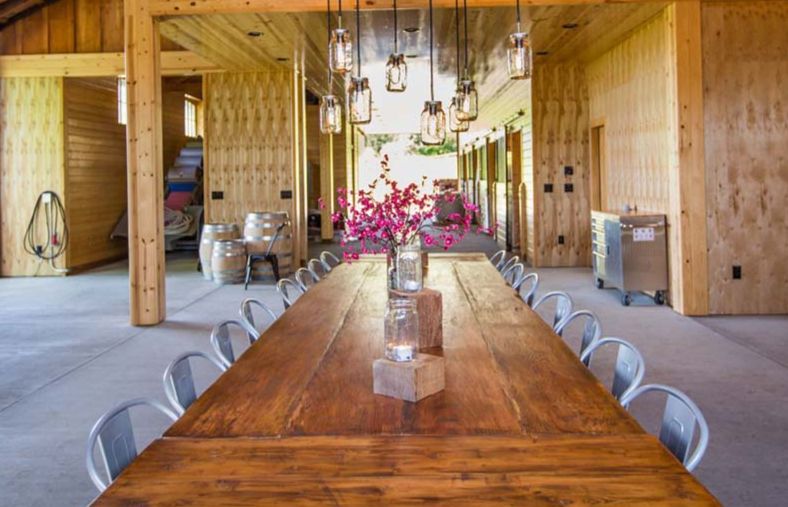
Photo from Travel Oregon - Hazelfern Winery, Newberg, OR
From Working Land to Lifestyle Property: An Ongoing Evolution
Oregon’s wine country hasn’t always been about leisure and luxury. For generations, this was hard-working farmland, with families growing crops and raising livestock. The transition began in the 1960s and 70s, when pioneering winemakers saw the valley’s potential for cool-climate grapes. Old barns became barrel rooms, and fields once filled with wheat were replanted with vines.
Today, many properties blend their working past with new uses. It’s common to find restored farmhouses with modern kitchens or historic barns converted into event spaces. This evolution is part of what makes wine country so unique: every building has a story, and every property is a blend of heritage and innovation.
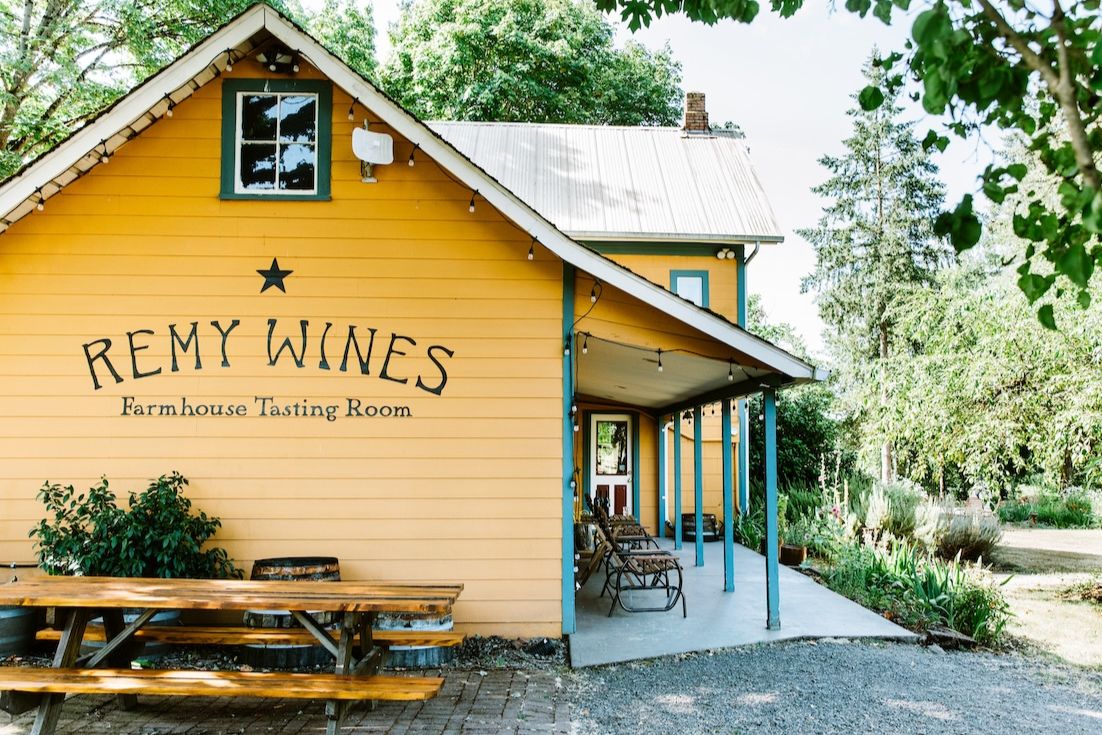
Photo from RemyWines.com
Layouts, Outbuildings, and Land Use: Why They Matter
The design of wine country homes isn’t just about aesthetics—it’s about honoring the rhythms of the land. Traditional farmhouses were oriented to maximize sunlight and shelter, with outbuildings clustered for efficiency. Barns, smokehouses, and sheds were essential for storing tools, curing meats, or sheltering animals.
Even today, thoughtful layouts matter. Modern vineyard estates often include guest cottages, wine cellars, and tasting rooms, all positioned to take advantage of views and privacy. Many properties keep original barns or add new ones for events, workshops, or farm-to-table dinners. Land use regulations in Oregon also encourage preservation, ensuring that open spaces and agricultural uses remain central to the landscape.
How Buyers Can Honor the Land’s History
- Restore, don’t replace: If you purchase a historic home, consider restoring original features—wood beams, stone fireplaces, or old barns—rather than tearing them down. These details connect your home to its past.
- Embrace sustainable living: Use native plants in landscaping, install energy-efficient systems, and maintain wildlife corridors to keep the land healthy for future generations.
- Learn the land’s story: Ask about your property’s history, talk to neighbors, or visit local museums. Understanding the land’s past can inspire how you live on it today.
- Support local agriculture: Even if you’re not farming, consider leasing fields to local growers or starting a small orchard or garden. Every little bit helps keep wine country vibrant and productive.
- Get involved: Join neighborhood events, farmers’ markets, or historical societies to deepen your connection to the community and its heritage.
Living in Wine Country: A Legacy to Cherish
Whether you’re relocating from Portland or simply seeking a new adventure in Oregon’s wine country, remember: every home here is part of a much larger story. From farmhouses that sheltered generations of growers to vineyard estates that celebrate the land’s bounty, these properties are more than just places to live—they’re a tribute to Oregon’s agricultural heart.
Ready to make your own mark in wine country? Reach out to learn more about homes that blend history, beauty, and a sense of stewardship for the land. Your next chapter could be one that honors the past and shapes the future of this extraordinary region.
Categories
- All Blogs (158)
- Divorce (5)
- Downsizing (6)
- Eco-Friendly Living (4)
- Explore Oregon (40)
- Food (1)
- Home Buying (96)
- Home Maintenance (26)
- Home Selling (55)
- Home Styling & Staging (2)
- Join REAL (11)
- LGBTQIA+ (11)
- My Life (4)
- Neighborhoods (23)
- PNW Gardening (10)
- Real Estate History (14)
- Relocation (43)
- Veteran Loans (1)
Recent Posts





LET'S CHAT