
The Hidden History of Company Towns in Oregon (and How They Shaped Housing Today)
The Hidden History of Company Towns in Oregon (and How They Shaped Housing Today)
When you wander through the tree-lined streets of Vernonia, Oakridge, or the quieter corners of the Willamette Valley, you might notice something unique: neighborhoods with uniform homes, extra-wide lots, or walkable town centers that feel different from suburban developments. These aren’t just quirks—they’re clues to Oregon’s hidden history of company towns, a legacy that still shapes where and how we live today.
The Rise of Oregon’s Company Towns
In the late 19th and early 20th centuries, Oregon’s vast forests and strategic rail lines made it a magnet for timber, railroad, and mill companies. To attract workers and keep production humming, these companies didn’t just build factories—they built entire towns. Places like Mill City, Cascade Locks, Astoria, and several Willamette Valley communities sprang up almost overnight, their streets and homes planned from scratch by corporate engineers.
Company towns weren’t unique to Oregon, but the scale and speed at which they appeared here left a lasting mark on the state’s landscape. In many cases, the land, the houses, and even the stores were owned by the company, creating a self-contained world where daily life revolved around the mill whistle or train schedule.
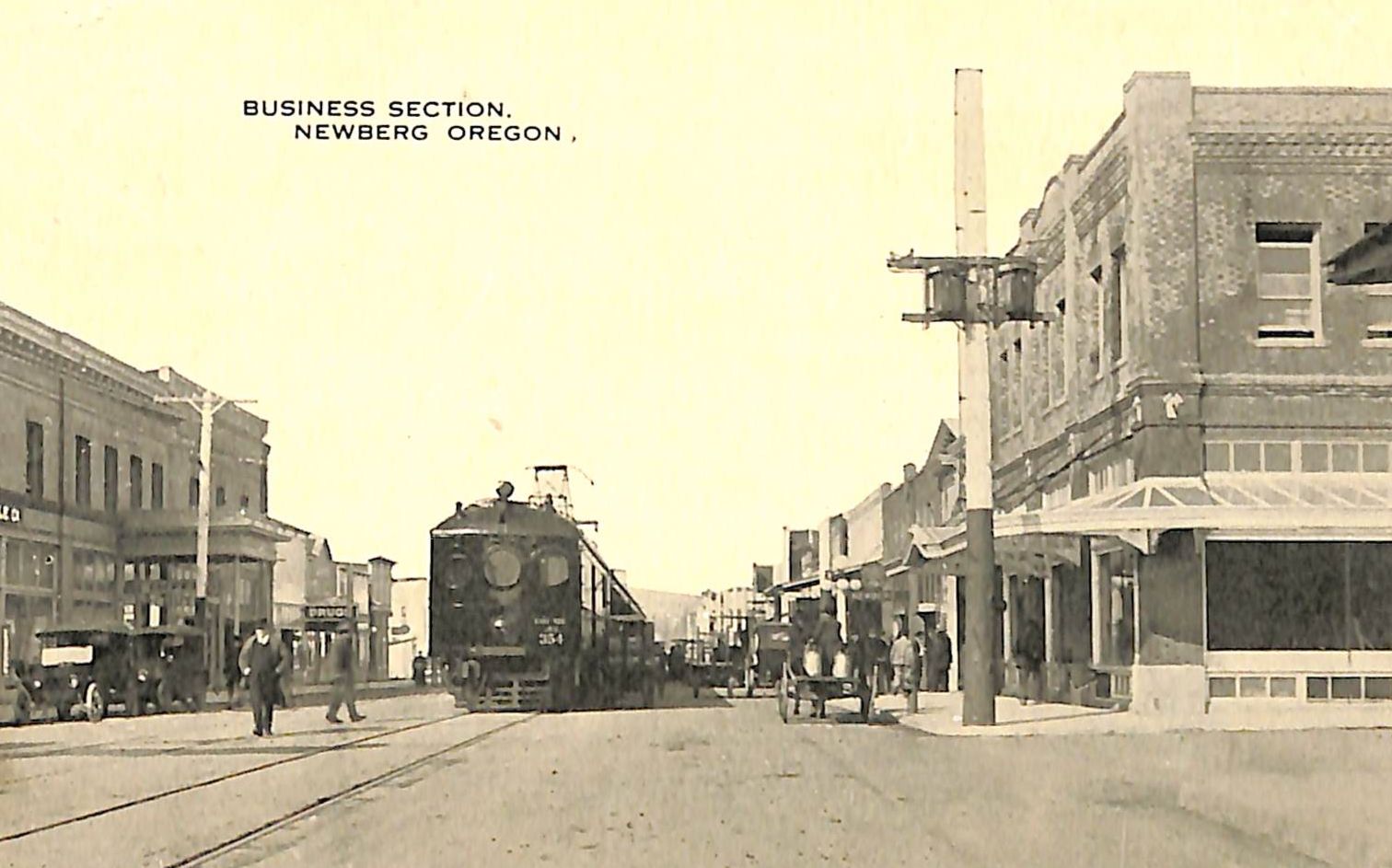
Newberg, Oregon - George Fox Archives
Why Worker Housing Was Built the Way It Was
The design of worker housing in these towns was all about efficiency and community. Companies needed to house large numbers of workers quickly, so homes were often modest, with simple floor plans and minimal ornamentation. Rows of nearly identical cottages lined the streets, each with a small yard for a garden or chickens. Larger homes were reserved for managers or supervisors, reflecting the social hierarchy of the time.
Despite their simplicity, these homes were built to last—many still stand today, their sturdy construction a testament to the skills of local carpenters and the quality of Oregon timber. The focus on function over form meant that neighborhoods were walkable, with schools, stores, and gathering places just a short stroll from every front door.
Company Ownership and the Shape of Towns
Because the company owned the land, it controlled not just where homes were built, but how big each lot was and how close neighbors lived to one another. This influenced everything from lot sizes (often smaller and more uniform than in later suburban developments) to the placement of streets and public spaces. The goal was to create efficient, close-knit communities that fostered loyalty and minimized travel time for workers.
In many company towns, the layout encouraged walkability long before it became a buzzword. Homes clustered around central amenities, with wide sidewalks and tree-shaded streets. The legacy of these planning decisions can still be seen today in the density and design of older neighborhoods throughout Oregon’s former mill towns.
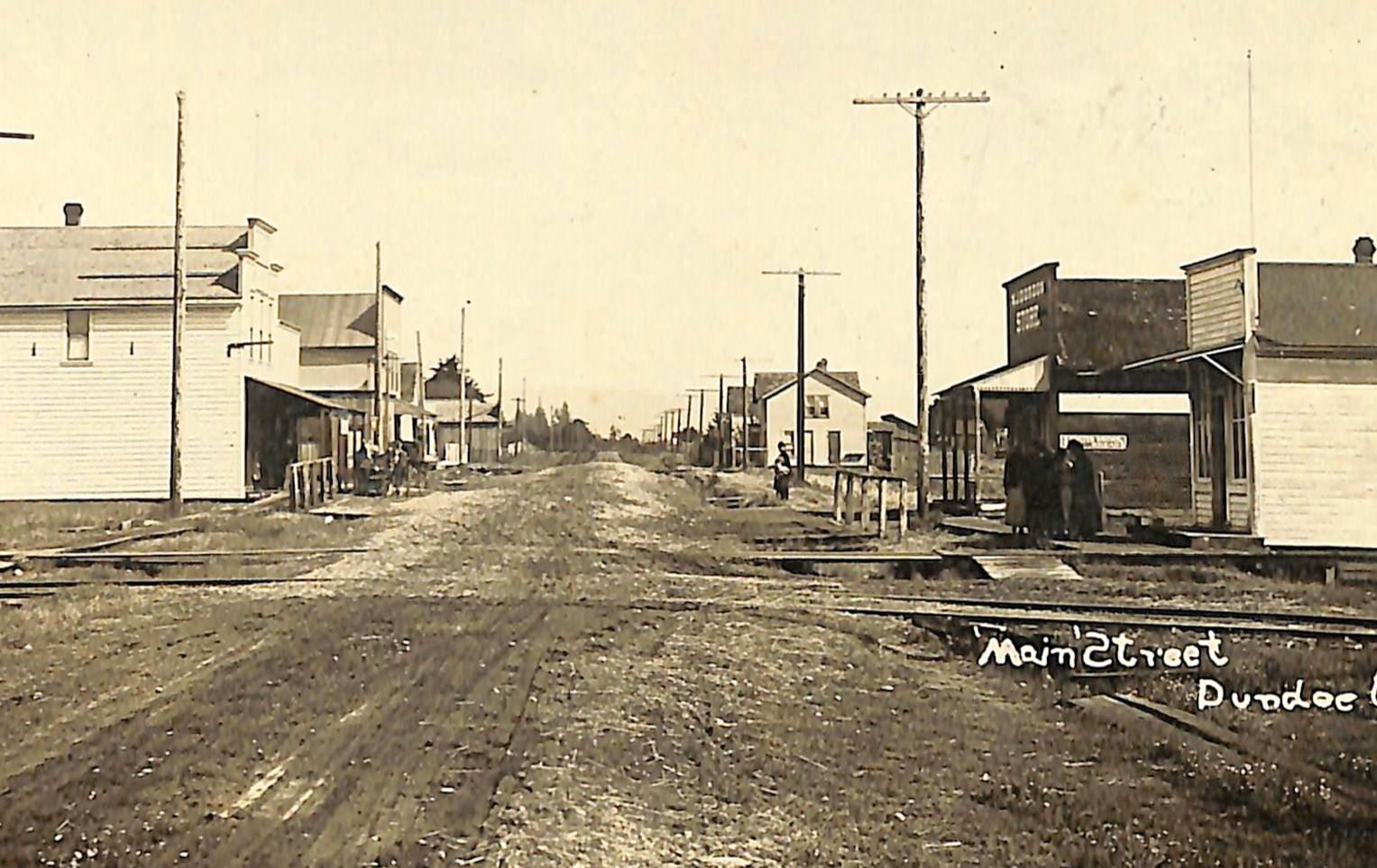
Dundee, Oregon - George Fox Archives
What Homebuyers Still See in Oregon’s Mill Towns
Today, buyers exploring historic districts in the Willamette Valley will notice echoes of the company town era everywhere. Many neighborhoods still feature:
- Uniform lot sizes: Lots tend to be narrower and more regular than in newer suburbs, a holdover from company-era planning.
- Simple, sturdy homes: Many houses have compact footprints, front porches, and practical layouts designed for working families.
- Walkable layouts: Town centers remain pedestrian-friendly, with shops, schools, and parks close to residential areas.
- Community spirit: The close-knit feel of company towns often persists, with neighbors who know each other and a strong sense of local identity.
For those relocating from Portland or moving within the region, these towns offer a unique blend of history, affordability, and small-town charm. Restoring an old mill house or settling into a walkable neighborhood can be a way to connect with Oregon’s past while enjoying a vibrant present.
Company Towns and Today’s Housing Trends
The influence of Oregon’s company towns goes beyond nostalgia. As cities and towns look for ways to create more affordable, sustainable, and connected communities, planners often look back to the lessons of these early settlements—walkable streets, mixed-use zoning, and homes that foster community. In many ways, the DNA of company towns lives on in today’s most sought-after neighborhoods.
Thinking about making a move or just curious about the story behind your street? Oregon’s company towns offer a fascinating glimpse into how history shapes our homes—and our lives—today.
Categories
- All Blogs (158)
- Divorce (5)
- Downsizing (6)
- Eco-Friendly Living (4)
- Explore Oregon (40)
- Food (1)
- Home Buying (96)
- Home Maintenance (26)
- Home Selling (55)
- Home Styling & Staging (2)
- Join REAL (11)
- LGBTQIA+ (11)
- My Life (4)
- Neighborhoods (23)
- PNW Gardening (10)
- Real Estate History (14)
- Relocation (43)
- Veteran Loans (1)
Recent Posts





LET'S CHAT