
REAL Broker vs. Traditional Brokerages: What New Agents Should Know Before Choosing
If you’re a newly licensed agent (or thinking about getting licensed), one of the biggest decisions you’ll make early on is: which brokerage to join. The choice will shape not only your first deals — but how you build your business, how quickly you grow, and whether you feel supported in the long haul.
Here, I compare REAL Broker, LLC (“REAL Broker”) with what most people think of as “traditional brokerages.” The goal: help you decide which path aligns best with your goals, your work style, and your vision for a real estate career.
🧭 What do we mean by “Traditional Brokerage”?
When I say “traditional brokerage,” I’m referring to firms with physical offices, sometimes local or regional franchises, where agents often go in for desk space, in-person meetings, in-office support staff — the old-school model. These brokerages often have established reputations and legacy brand recognition.
Typical commission arrangements at traditional brokerages can vary, but many have splits that leave a significant portion of the agent’s commission to the brokerage. Along with that come costs: office overhead, desk fees (or monthly/annual fees), staffing, utilities — expenses that the brokerage has to absorb, and which often get baked into what the agent pays (in split, fees, or both).
For some agents — especially those who appreciate structure, face-to-face support, and a recognizable brand — traditional brokerages are appealing. But they also tend to come with higher overhead and less flexibility.
✅ What REAL Broker Does Differently — and Why It Matters for New Agents
• Generous Commission Split + Clear Cap
-
REAL Broker operates on an 85/15 split for agents until reaching a $12,000 annual cap. Once capped, agents keep 100% of their commissions (minus only modest transaction-level fees).
-
By comparison, many traditional brokerages may offer lower splits, and agents often absorb overhead costs, desk fees, or franchise fees — which can eat into take-home pay. For a new agent, this model means you potentially keep a larger percentage of each check — which can be critical in the early days when volume might be low and every dollar counts.
• Low Overhead & Virtual Infrastructure — More Flexibility, Less Cost
-
REAL Broker is a cloud-based brokerage: no required commute to a physical office, no mandatory in-office hours, no rent/lease or associated office overhead.
-
That reduces fixed costs significantly — and in turn allows more savings to be passed to agents. It also means new agents can operate from home, coworking spaces, coffee shops, or wherever works best for them, giving flexibility that traditional models often lack.
-
For agents juggling other responsibilities — family, side gigs, education — that flexibility can make the difference between giving up or building a sustainable business.
• Tech, Tools & Support Built for a Modern Market
-
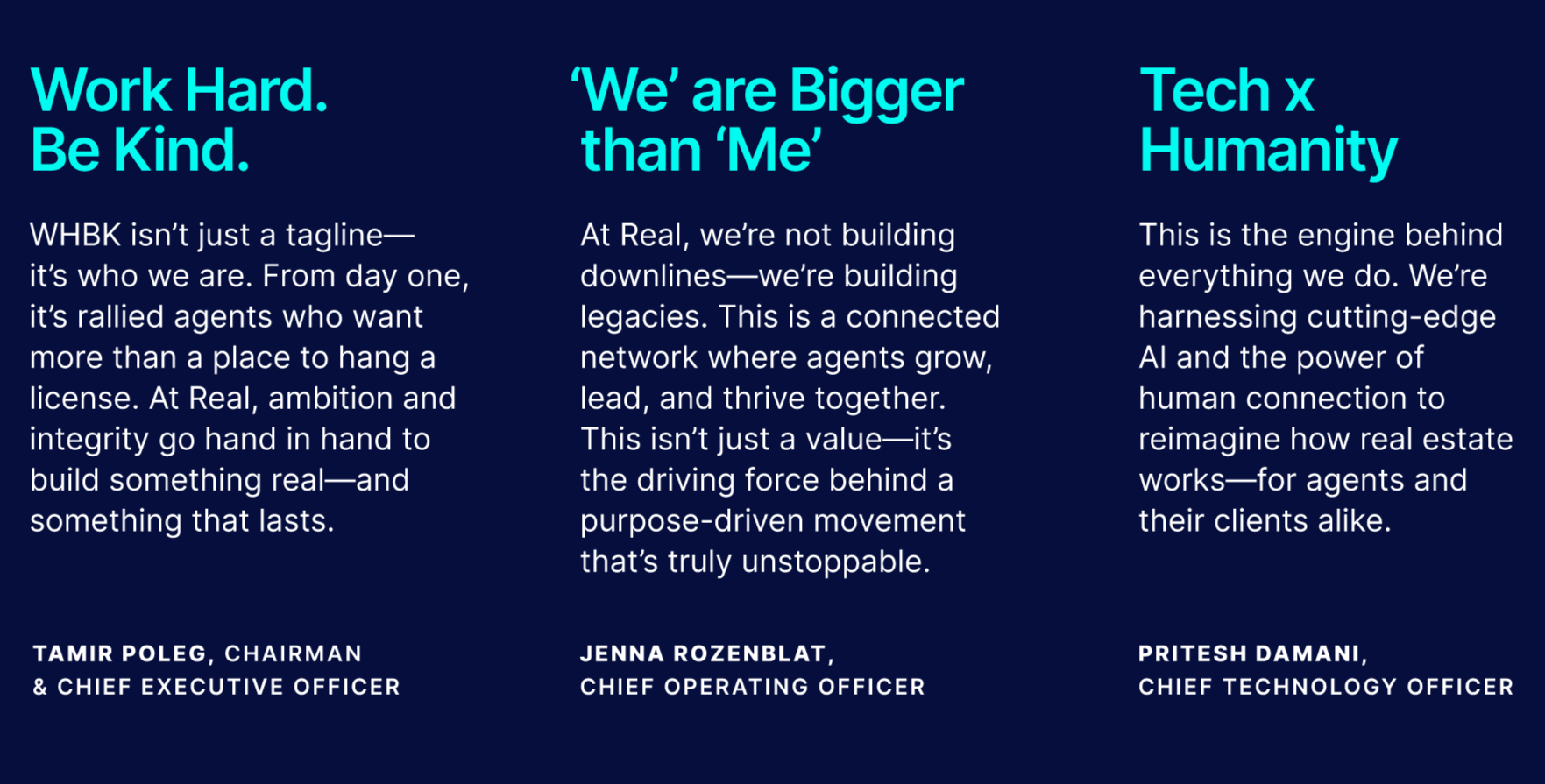
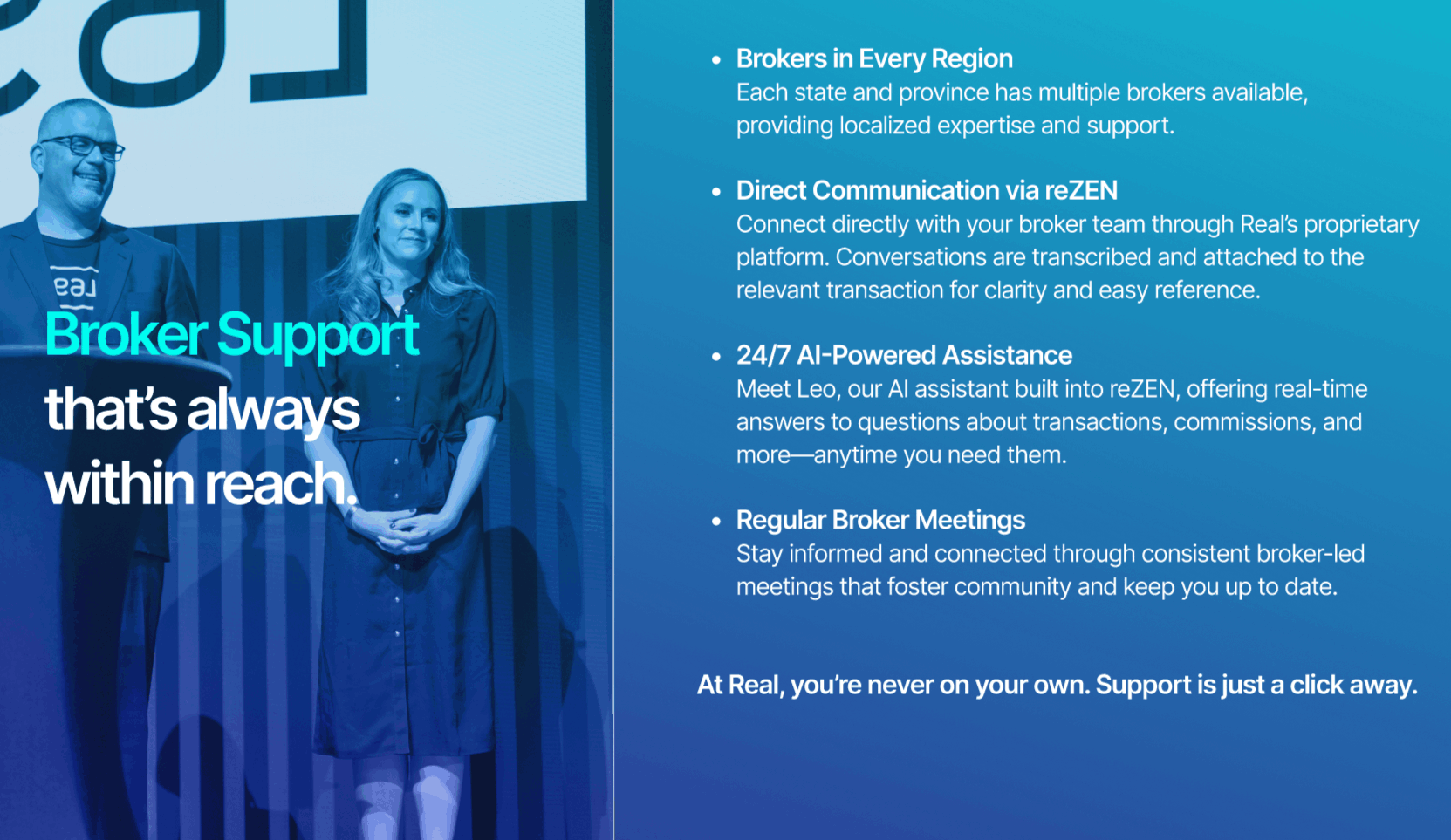
REAL Broker emphasizes technology: integrated platforms for CRM, transaction management, compliance, marketing tools, and remote support.
-
This “all-in-one dashboard” approach helps streamline back-office work, paperwork, and transaction logistics — freeing agents up to focus on clients, relationships, and growth.
-
For a new agent especially, having robust tech tools and support can reduce overwhelm, decrease administrative burden, and help you operate professionally from day one.
• Potential for Long-Term Growth: Revenue Share & Equity
-
Unlike many traditional brokerages, REAL offers agents the chance to earn beyond individual deals — through a revenue share model (overrides when you sponsor/bring in new agents) and stock/ equity options (e.g. bonuses, restricted-stock-units upon hitting milestones).
-
That means your success isn’t just tied to your own transaction volume, but can grow with your network and effort — offering a path toward building a business, or even passive income streams, over time.
• Broad, Decentralized Network — Less Geographic Restriction
-
Because REAL is not tied to a single physical office or local franchise, agents can operate across various regions — which may open up broader opportunity for referrals, buyers/sellers in different markets, or flexibility if you move.
-
For agents in transition or those valuing mobility — or for those who want the ability to service clients beyond their immediate locality — this model can offer more latitude than a locally anchored traditional office.
⚠️ What to Consider — Where Traditional Brokerages Still Hold Strength
• Brand Recognition & Local Presence
-
Many traditional brokerages have long-standing reputations and local brand awareness. For certain clients, especially older or more risk-averse, that recognition can influence trust and perceived legitimacy.
-
For new agents, especially in tight-knit communities or small towns with legacy brokerages, that familiarity may make it easier to attract clients who lean on name recognition.
• In-Person Mentorship and Office Culture
-
Brick-and-mortar brokerages offer face-to-face interactions: spontaneous conversations, daily walk-throughs, in-person mentorship, and local networking — all valuable especially for agents learning the ropes.
-
For some people, that daily comradery and oversight can be grounding, especially early on when the unknowns feel overwhelming.
• Potential Isolation & Self-Discipline Required at Cloud Brokerages
-
Because a cloud-based model is often remote and less structured, new agents need self-discipline, motivation, and proactivity. Without an office full of peers, some trainees may struggle to stay consistent.
-
Also — though tech tools and remote support exist — if you value in-person interaction, mentorship, or client walk-ins via office traffic, cloud brokerages may feel less “tangible.”
🎯 So — Which Model Fits You Best? Questions You Should Ask Before Deciding
Here are some questions to consider when choosing between REAL Broker and a traditional brokerage:
-
Do you value flexibility (location, schedule, remote work), or do you want in-person support and a physical office environment?
-
Are you comfortable self-motivating, managing your own schedule and leads — or do you thrive with more structure and oversight?
-
How important is commission split and low overhead to you, especially early in your career when volume may be low?
-
Do you value long-term growth potential — equity, revenue share, building a network — or are you focused on short-term commissions and direct support?
-
What kind of clients do you intend to serve — clients who trust established brand names, or people drawn to modern, tech-savvy, flexible real estate services?
✅ My Take — For Many New Agents, REAL Broker Offers a Strong — Often Undervalued — Alternative
If I were starting fresh today and building a business in a place like Oregon (with mobility, remote-friendly clients, and a lifestyle-minded market), I'd strongly lean toward a cloud-based brokerage like REAL. For a new agent who wants flexibility, low overhead, long-term growth potential, and access to modern tools — REAL Broker often offers more upside than many traditional models.
That said — if you value local recognition, in-person mentorship, and an established name, a traditional brokerage may make sense — especially early on as you build confidence.
The key is matching your personal style, values, and long-term goals to the model. There’s no one-size-fits-all “best,” but there is a “best for you.”
Categories
- All Blogs (158)
- Divorce (5)
- Downsizing (6)
- Eco-Friendly Living (4)
- Explore Oregon (40)
- Food (1)
- Home Buying (96)
- Home Maintenance (26)
- Home Selling (55)
- Home Styling & Staging (2)
- Join REAL (11)
- LGBTQIA+ (11)
- My Life (4)
- Neighborhoods (23)
- PNW Gardening (10)
- Real Estate History (14)
- Relocation (43)
- Veteran Loans (1)
Recent Posts










LET'S CHAT